Ultra-Fast GPU-Powered Transcoding Engine
Ultra-Fast GPU-Powered Transcoding Engine
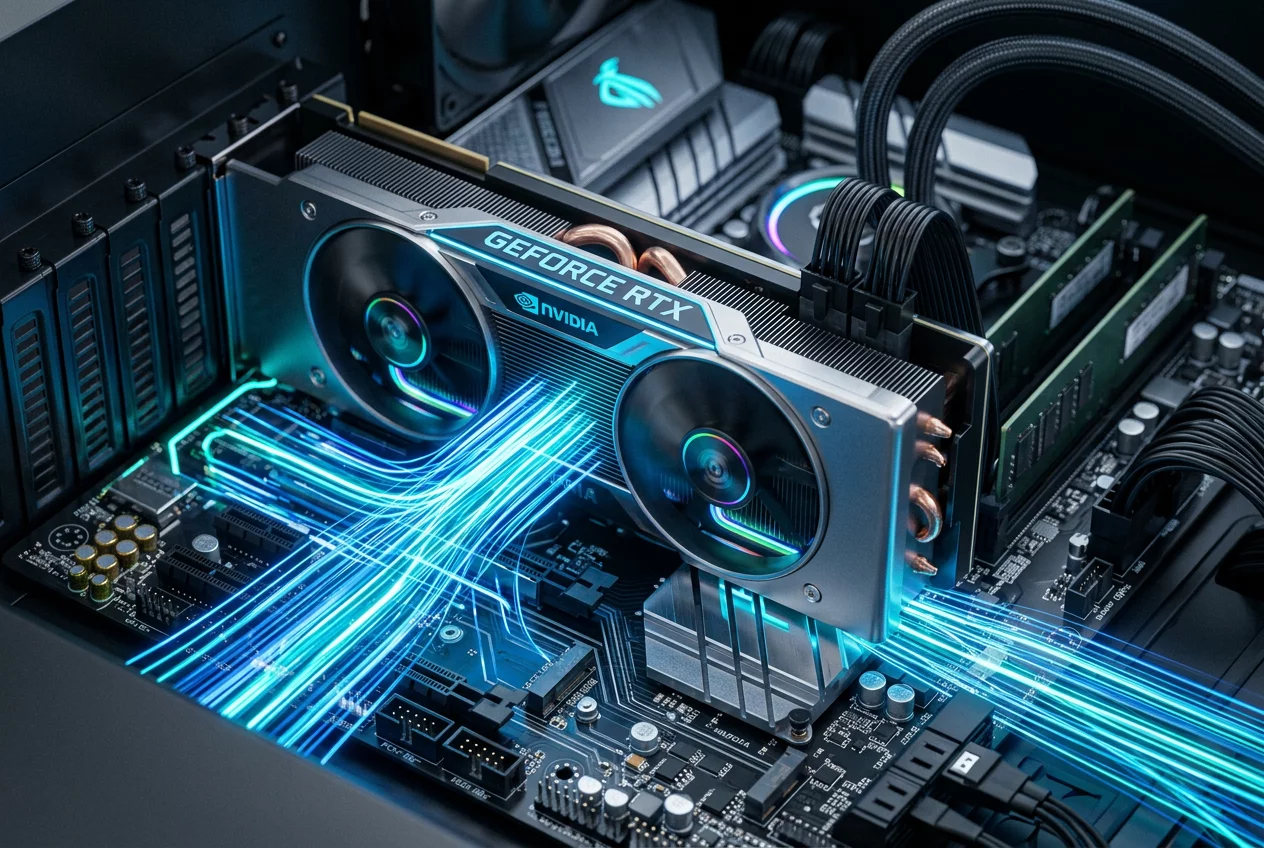
Revolutionizing Speed with Dedicated Hardware Acceleration
Modern video workflows demand processing power that traditional CPU-based systems struggle to provide. High-resolution files, especially in 4K and 8K, require immense mathematical throughput for compression and decompression. Turnexedic solves this challenge by offloading the most intensive tasks to the Graphics Processing Unit. The software communicates directly with NVIDIA NVENC, Intel QuickSync, and AMD AMF cores to accelerate the encoding process by up to ten times compared to standard software encoders. This engine utilizes every available teraflop of the hardware, ensuring that render times decrease while quality remains pristine. Systems equipped with multiple GPUs see even greater benefits, as the engine distributes fragments of the video across all available chips simultaneously.
Parallel Processing Architecture
Efficiency in video transcoding comes from the ability to handle multiple tasks at once. Instead of processing a single file from start to finish on one thread, the Turnexedic engine breaks the video into manageable chunks. These segments enter the processing pipeline in parallel. Each GPU core handles a specific set of frames, reconstructing the final file at the end of the chain. This approach eliminates bottlenecks and allows for real-time transcoding of live streams or high-speed batch processing of massive archives. Users observe a significant reduction in electricity costs and hardware wear, as the GPU handles these tasks with much higher energy efficiency than a general-purpose processor.
Supported Hardware Environments
The engine works across a wide spectrum of hardware configurations. Whether the infrastructure relies on workstation-grade cards or high-density server rack GPUs, the software adapts its instruction set to maximize output. Follow these steps to optimize the performance:
- Install the latest proprietary drivers for the specific GPU manufacturer.
- Check the available VRAM to ensure enough buffer space for high-resolution textures.
- Enable the multi-pass encoding feature for better visual fidelity at lower bitrates.
- Configure the hardware priority settings within the dashboard to allocate resources.
Optimized Memory Management
Memory bandwidth often becomes a limiting factor in high-speed video processing. The engine employs a sophisticated zero-copy memory architecture. This technology keeps the video data within the GPU's onboard memory throughout the entire transcoding cycle. Data stays on the card from the moment it is decoded until the final bitstream is packaged. By avoiding the slow transfer of data between the GPU and the system RAM, the software maintains a high framerate even during complex filtering or color correction tasks. Professional editors appreciate this fluid performance, particularly when working with uncompressed or high-bitrate mezzanine formats. The result is a seamless workflow where the technology stays out of the way of the creative process.
Real-Time Performance Monitoring
Maintaining visibility into the transcoding pipeline remains vital for large-scale operations. The software provides detailed telemetry for every active job. Dashboards display real-time statistics regarding GPU load, temperature, memory usage, and current frames-per-second. These insights allow administrators to balance workloads across a cluster and identify potential hardware failures before they interrupt production. Precise logging tracks the efficiency of different codec profiles, helping the team fine-tune settings for the best balance of speed and storage requirements. Turnexedic transforms the complex task of video encoding into a transparent, manageable, and incredibly fast operation.
If you can envision it, then we can build it.
Contact Us
Turnexedic
Turnexedic is a software provider focused on media processing technology. We offer tools for video transcoding, helping businesses manage digital content efficiently. Our platform supports various formats and delivery standards globally.
Menu
Contacts
-
- Location:
- 8793, West Dahlia Drive, Peoria, 85381, United States
-
- Phone:
-
- E-mail:
- turnexedic-subscribe@yahoo.com