Automated Content QC and Error Detection
Automated Content QC and Error Detection
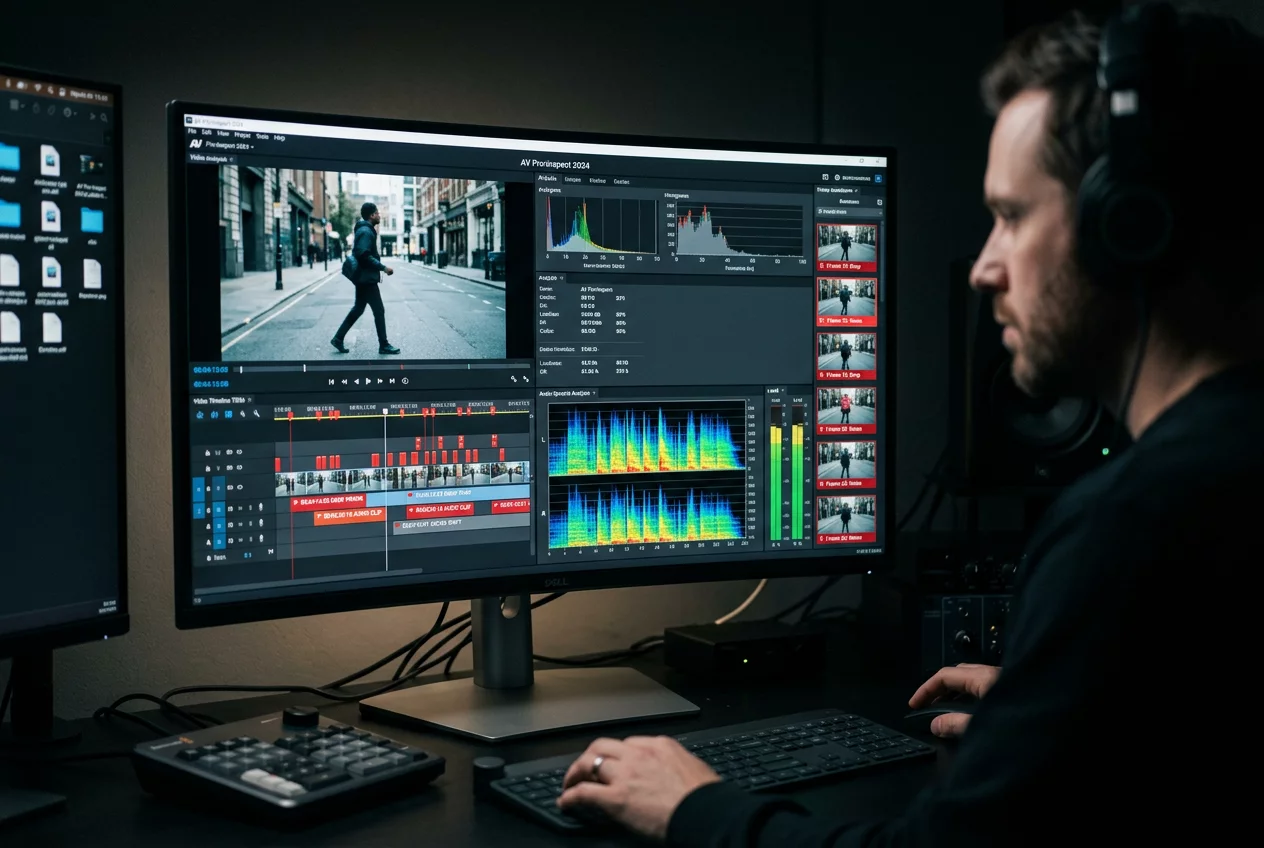
Ensuring Flawless Playback with AI Inspection
Quality control remains one of the most time-consuming parts of the media production cycle. Human reviewers can miss subtle glitches, especially in long-form content. Turnexedic introduces an automated QC system that acts as a tireless digital eye. The software scans every frame and every millisecond of audio to identify technical defects. It detects common issues such as black frames, freeze frames, and macroblocking caused by compression errors. By moving QC to the transcoding stage, the system identifies problems before the content is published. This proactive approach saves time and prevents the embarrassment of delivering faulty media to an audience.
Deep Analysis of Audio and Video
The error detection engine goes beyond simple visual scans. It analyzes the underlying data structure of the file to find deeper inconsistencies. For audio, the system checks for loudness compliance with industry standards like EBU R128 or ATSC A/85. It identifies digital clips, prolonged silence, and phase issues that could affect mono compatibility. On the video side, the software looks for interlacing artifacts, color gamut violations, and cadence breaks. Every detected error receives a timestamp and a severity rating. This allows engineers to quickly jump to the problematic sections and decide on the necessary corrective actions.
The QC Workflow in Practice
Integrating automated QC into an existing pipeline increases reliability without adding friction. The system operates as a background process during or after the transcoding phase. Follow these steps to set up a robust QC routine:
- Define a custom profile based on the delivery requirements of the target platform.
- Set threshold levels for what constitutes a critical error versus a warning.
- Automate the generation of PDF or XML reports for every processed file.
- Configure email or Slack notifications for failed inspections.
Reducing Manual Oversight
By automating the detection of objective technical errors, the QC engine frees up human operators to focus on subjective quality. Editors no longer need to sit through hours of footage just to check for dropped frames. They can instead focus on the creative aspects of the edit, confident that the software will catch any technical mishaps. This shift in responsibilities leads to a more efficient production house and a higher overall standard of output. The software scales effortlessly, allowing companies to process hundreds of hours of content daily with the same level of scrutiny applied to every minute.
Integration with Media Asset Management
Data from the QC engine provides valuable insights for the entire organization. The error reports attach directly to the files within a Media Asset Management (MAM) system. This ensures that only verified, high-quality assets move forward to the distribution or archiving stage. If a file fails the inspection, the system can automatically trigger a re-transcode or move the file to a quarantine folder for manual review. Turnexedic builds a safety net around the media supply chain, ensuring that every piece of content meets the highest technical standards before it ever reaches a screen.
If you can envision it, then we can build it.
Contact Us
Turnexedic
Turnexedic is a software provider focused on media processing technology. We offer tools for video transcoding, helping businesses manage digital content efficiently. Our platform supports various formats and delivery standards globally.
Menu
Contacts
-
- Location:
- 8793, West Dahlia Drive, Peoria, 85381, United States
-
- Phone:
-
- E-mail:
- turnexedic-subscribe@yahoo.com